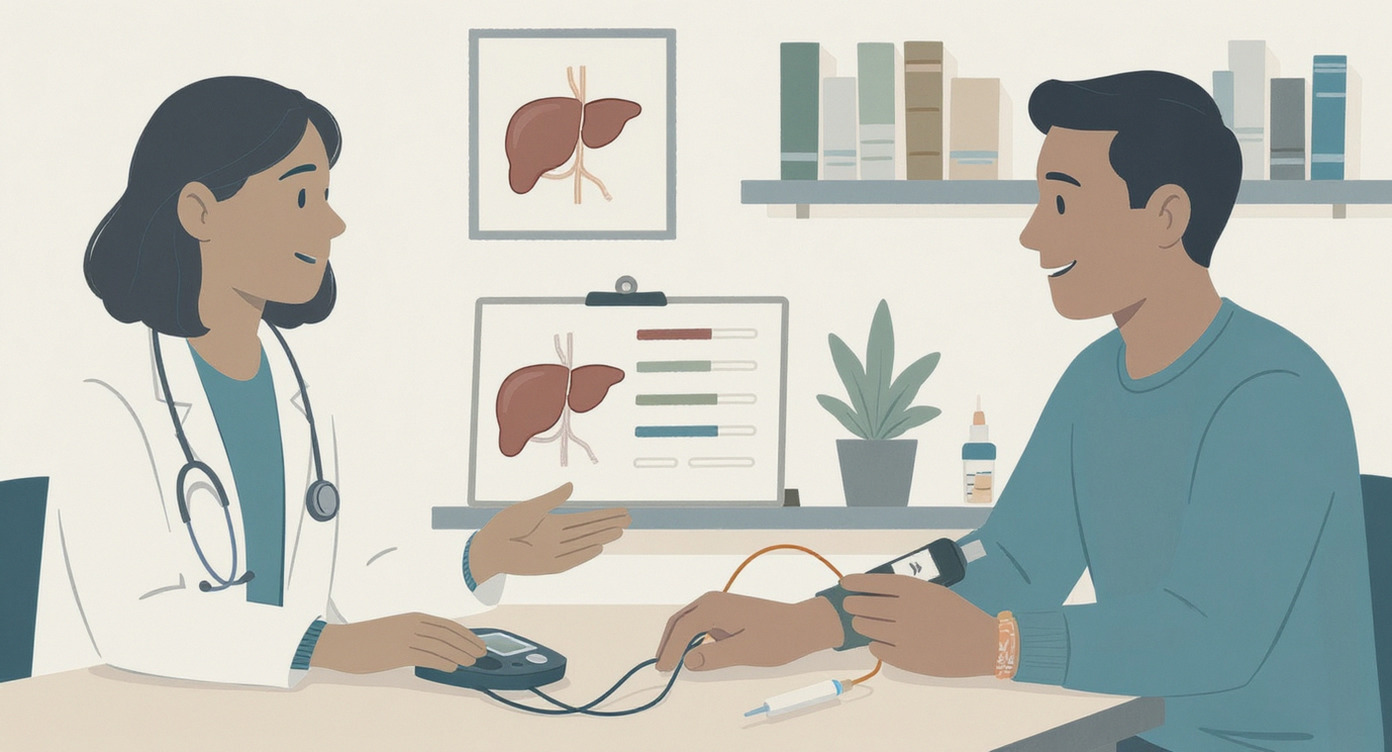
Your pancreas is working overtime so it’s pumping out insulin, but your cells aren’t listening. Sugar builds up in your blood instead of fueling your muscles and brain. That’s type 2 diabetes in 30 seconds.
About 37 million Americans have diabetes, and 90-95% of them have type 2. Most were diagnosed after age 45, but younger cases are rising fast. The good news? This condition responds to treatment. Many people reverse their symptoms entirely.
How type 2 diabetes develops
It starts with insulin resistance so your muscle, fat, and liver cells stop responding normally to insulin. Think of insulin as a key that unlocks your cells so glucose can enter. In insulin resistance, the locks get rusty.
Your pancreas compensates by making more insulin. For a while, this works. Blood sugar stays normal because you’re flooding your system with extra keys so but the pancreas can’t keep this up forever.
Eventually, it burns out. Insulin production drops. Blood sugar rises. That’s when you cross from prediabetes into type 2 diabetes.
The whole process usually takes years. Most people have no idea it’s happening.
Warning signs you shouldn’t ignore
Early type 2 diabetes symptoms are easy to miss. They creep in slowly. You might explain them away as stress or aging.
Watch for these:
- Urinating more often, especially at night
- Constant thirst that water doesn’t fix
- Unexpected weight loss despite eating normally
- Blurry vision that comes and goes
- Cuts and bruises that heal slowly
- Tingling or numbness in your hands and feet
- Fatigue that sleep doesn’t touch
Here’s what’s happening: your kidneys work overtime to filter excess sugar. You pee more. You get dehydrated. You drink more. The cycle continues.
Blurry vision? High blood sugar pulls fluid from your eye lenses. Slow healing? Sugar-rich blood feeds bacteria and damages blood vessels. Every symptom traces back to that same root cause.
What causes this in the first place
Genetics loads the gun. Lifestyle pulls the trigger.
If your parent or sibling has type 2 diabetes, your risk doubles or triples. Certain ethnic backgrounds carry higher risk too: African Americans, Hispanic Americans, Native Americans, and Asian Americans all face elevated odds.
But genes aren’t destiny. The bigger factors are ones you control:
Weight matters most. Fat tissue, especially around your abdomen, promotes insulin resistance. Losing just 5-7% of body weight can dramatically improve insulin sensitivity. For someone weighing 200 pounds, that’s 10-14 pounds.
Movement matters. Muscle cells become more insulin-sensitive after exercise. The effect lasts 24-48 hours. Regular activity keeps those cells responsive.
Food matters. Refined carbohydrates spike blood sugar fast. Your pancreas scrambles to keep up. Repeated spikes wear it down. Fiber, protein, and healthy fats slow glucose absorption and ease the burden.
Sleep matters. Poor sleep increases insulin resistance. One study found that sleeping 4 hours a night for just 6 nights reduced insulin sensitivity by 40%.
Getting the right diagnosis
Three tests confirm type 2 diabetes. Your doctor might use one or more:
A1C test: Measures average blood sugar over 2-3 months. Normal is below 5.7%. Prediabetes is 5.7-6.4%. Diabetes is 6.5% or higher.
Fasting blood sugar: Taken after 8 hours without food. Normal is under 100 mg/dL. Prediabetes is 100-125 mg/dL. Diabetes is 126 mg/dL or higher.
Glucose tolerance test: Measures blood sugar before and 2 hours after drinking a sugary solution. Diabetes is 200 mg/dL or higher at the 2-hour mark.
One abnormal result usually means a repeat test. Two abnormal results confirm the diagnosis.
What treatment looks like
Effective type 2 diabetes treatment combines several approaches. No single intervention works alone.
Diet changes come first. You don’t need to eliminate carbs entirely because you need to choose better ones and control portions. Vegetables, whole grains, lean proteins, and healthy fats form the foundation and processed foods, sugary drinks, and refined grains need to go.
Exercise is medicine. The American Diabetes Association recommends 150 minutes of moderate activity weekly. That’s 30 minutes, 5 days a week. Walking counts. Swimming counts. Whatever you’ll actually do counts.
Weight loss amplifies everything. Even modest weight loss improves blood sugar, blood pressure, and cholesterol. Some people achieve remission through weight loss alone.
Medications fill gaps. Metformin is usually first. It reduces glucose production in the liver and improves insulin sensitivity. If that’s not enough, your doctor might add other drugs: SGLT2 inhibitors, GLP-1 receptor agonists, sulfonylureas, or eventually insulin.
Monitoring keeps you honest. Regular blood sugar checks show what’s working. A1C tests every 3-6 months track long-term progress. Numbers don’t lie.
Complications you’re preventing
Uncontrolled type 2 diabetes damages blood vessels and nerves throughout your body. The list of complications sounds scary because it should motivate action.
Heart disease and stroke risk doubles. High blood sugar damages artery walls and promotes plaque buildup. Cardiovascular problems cause most diabetes-related deaths.
Kidney disease develops in about 1 in 3 diabetic adults yet the kidneys filter your blood constantly. Years of high sugar damages the tiny blood vessels that do the filtering.
Nerve damage affects up to 50% of people with diabetes. It usually starts in the feet: tingling, burning, then numbness. You might not feel a cut or blister. Infections follow. In severe cases, amputation becomes necessary.
Eye problems include diabetic retinopathy, glaucoma, and cataracts yet high blood sugar damages retinal blood vessels. It’s the leading cause of blindness in working-age adults.
Good news: tight blood sugar control cuts complication risk dramatically. The landmark UKPDS study found that every 1% drop in A1C reduced microvascular complications by 37%.
Can you actually reverse it
Remission is possible. Not guaranteed, but possible.
A 2019 study in the journal Diabetologia followed people who lost significant weight through diet changes. Nearly half achieved remission at 1 year. At 2 years, 36% stayed in remission.
What qualifies as remission? An A1C below 6.5% without diabetes medications for at least 3 months.
Earlier intervention works better. The longer you’ve had diabetes and the more beta cell damage you’ve accumulated, the harder remission becomes. If you’ve just been diagnosed, you’ve the best shot.
Even without full remission, improvement matters. Moving from an A1C of 9% to 7% significantly reduces your complication risk. Progress beats perfection.
Next steps if this sounds like you
Get tested. A simple blood draw gives you answers. If you’re over 45, overweight, or have risk factors, the American Diabetes Association recommends screening every 3 years.
If you’ve already been diagnosed, focus on one change at a time so replace sugary drinks with water this week. Add a 15-minute walk next week. Build habits that stick rather than overhauling everything at once.
Type 2 diabetes is serious. It’s also manageable. The gap between those two facts is filled by the choices you make today.